
Jerry Lankton Red and Black 2011 IMCA Dirt Modified
« See all cars See Design Tips ⇓

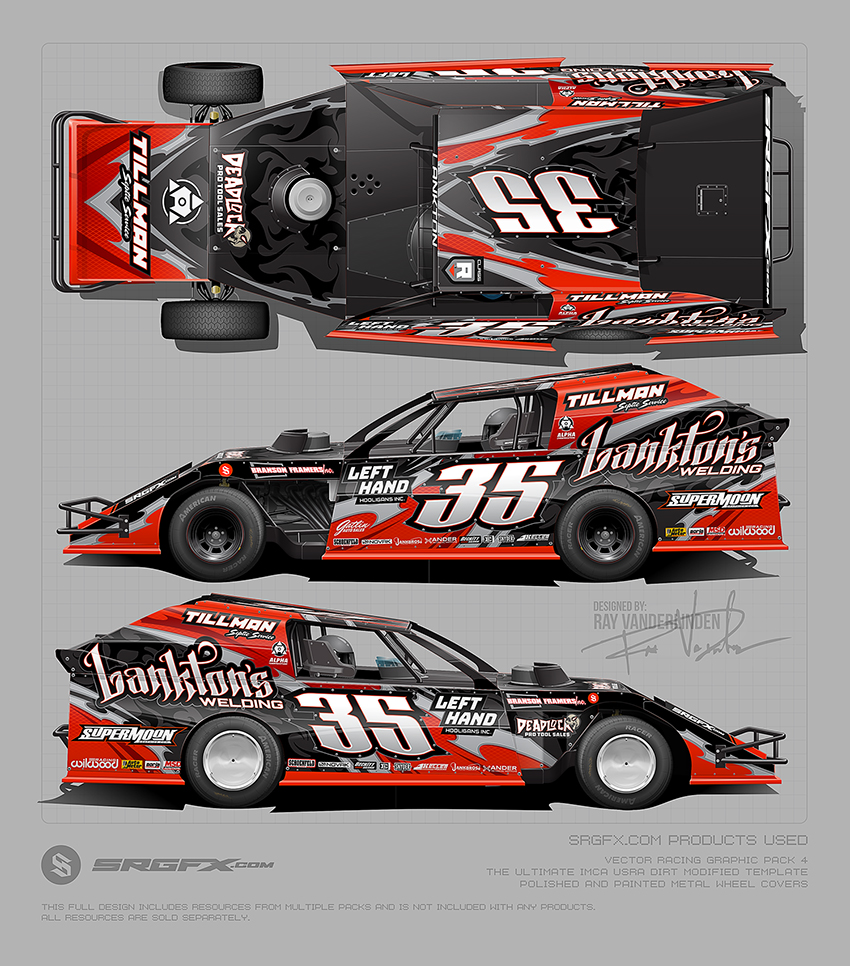
High-impact IMCA / USRA Dirt Modified wrap design template featuring a long sail panel layout with bold red, black, and gray color blocking and aggressive race-style number placement. This professional dirt track wrap layout is fully customizable, allowing designers to modify colors, graphics, and panel flow to fit any driver or team branding. Car numbers, logos, and sponsor artwork shown are for display purposes only and are not included — giving wrap designers full flexibility to add their own numbers, sponsors, and contingency branding for print-ready race car wraps
 Design Tip #1 Prioritize Number Legibility Above Everything
Your number is the driver’s brand, so it must read instantly from distance—not just on the shop screen. Open internal spacing, widen gaps between digits, and don’t rely on the font as-is; customize shapes and counters so they don’t collapse into a blob at speed. Avoid unnecessary effects like drop shadows or over-pointed outlines if they fracture the silhouette—a bold, clean outline with breathing room will always outperform decorative complexity.
Design Tip #2 Establish Clear Brand Hierarchy & Sponsor Structure
Design the car in visual order: number first, primary sponsor second, then supporting sponsors—each with intentional scale and placement. The primary sponsor sets the tone for the entire wrap, so its colors, style, and attitude should influence the number treatment and overall graphic direction. Use outlines, color fields, and spacing with purpose—not decoration—to create separation, readability, and brand dominance where it matters most.
Design Tip #3 Use Graphics & Layout to Support—Not Compete
Graphics should create contrast fields that help numbers and sponsors stand out, not introduce clutter or visual confusion. Avoid stacking too many color fields behind key elements, and be mindful that shapes or highlights don’t accidentally read like extra digits at speed. Resolve patterns, gradients, and textures into body seams or plastic edges so installs look intentional, cohesive, and forgiving in the real world.

